
Eric J. Aulicino, Chief Executive Officer, LifeAire Systems
There is a field of medicine that has been taking air quality seriously as a direct determinant of clinical outcomes for more than twenty years. It has peer-reviewed published evidence demonstrating that the air surrounding a clinical process measurably influences whether that process succeeds or fails. It has developed protocols, technologies, and institutional standards specifically designed to control the airborne environment in ways that most of healthcare has not yet considered necessary.
That field is in vitro fertilization.
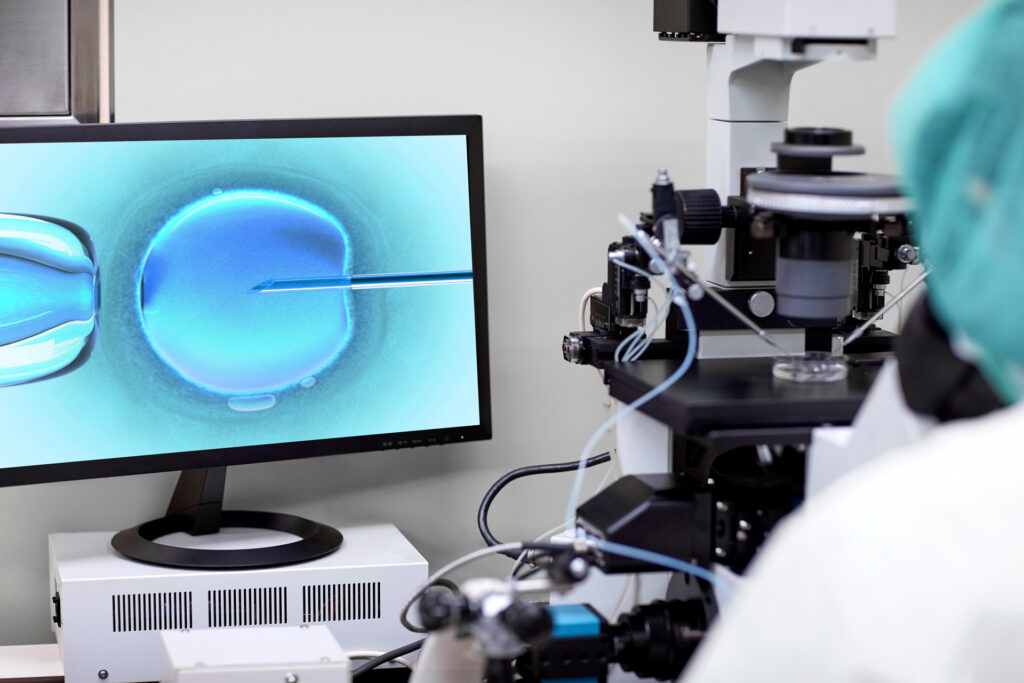
The IVF community arrived at this understanding through painful experience. Programs were seeing unexplained fluctuations in pregnancy rates — good cycles followed by poor cycles in ways that did not correlate with changes in clinical protocols, patient populations, or laboratory techniques. The investigation that followed led, eventually, to the air. Specifically to volatile organic compounds — airborne chemical contaminants generated by construction, vehicle exhaust, cleaning agents, building materials, and dozens of other everyday sources — that were infiltrating IVF laboratories and interfering with embryo development at concentrations so low they were essentially undetectable without specialized measurement.
The solution that emerged from that investigation is LifeAire’s technology. Dr. Kathryn Worrilow, LifeAire’s Founder and Chief Scientific Officer, spent more than twenty years researching the relationship between ambient air quality and human embryogenesis before developing the multi-stage air purification system that is now in use in IVF programs across the United States and internationally. The clinical evidence for that system’s effectiveness — a 14.9 percentage point average increase in ongoing pregnancy rates across a multi-center study of 5,319 cycles, published in Fertility and Sterility — is the foundation on which LifeAire’s entire technology platform is built.
What the IVF experience offers to the broader healthcare community is something more valuable than a technology recommendation. It is a twenty-year case study in what happens when a clinical field takes air quality seriously as a determinant of patient outcomes — and what becomes possible when it does.
THE IVF LABORATORY AS A MODEL ENVIRONMENT
The IVF laboratory is not a typical clinical environment. It is, in the specific sense that matters for this conversation, the most demanding air quality environment in all of clinical medicine.
The reason is the human embryo. In the first days of development, a human embryo is extraordinarily sensitive to its chemical environment. Volatile organic compounds that would be imperceptible to any adult in the room — present at concentrations measured in parts per billion — can measurably impair cell division, disrupt embryonic development, and reduce the probability of a successful implantation and pregnancy. The embryo has no immune system, no physiological defense, no capacity to adapt. It is entirely dependent on the quality of the environment the laboratory creates for it.
That vulnerability is what drove the IVF community to develop air quality standards and technologies that the rest of healthcare has not yet needed to match. The stakes were simply too visible and too immediate to ignore. When a program’s pregnancy rates dropped after nearby road construction, or recovered when a contamination source was identified and remediated, the connection between air quality and clinical outcome was undeniable.
The technology that emerged from that environment — LifeAire’s patented multi-stage system combining VOC neutralization, UV pathogen kill, and molecular media filtration — was designed to meet the most demanding biological standard in clinical medicine. It achieves a 9-log reduction of infectious biological pathogens in a single pass and reduces total VOC burden to below 50 parts per billion. It does this continuously, around the clock, in every pass of air through the system.
When that same technology is deployed in a hospital, it is not being applied to an environment as demanding as the IVF laboratory. It is bringing a standard that was set against the hardest possible benchmark to an environment where the standard required is meaningfully lower. That is a significant margin of confidence for a hospital leader evaluating whether the technology is adequate for their environment.
WHAT IVF PROGRAMS LEARNED THAT HOSPITALS HAVE NOT YET
The IVF community learned several things over two decades of serious engagement with air quality that are directly applicable to hospital and healthcare settings, and that the broader healthcare industry has largely not yet internalized.
The first is that VOCs are a separate problem from biological pathogens, and that solving one does not solve the other. HEPA filtration addresses particulates and captures some biological pathogens. It does not address VOCs at all. In IVF laboratories, the recognition that VOC contamination was a primary driver of outcome variation — independent of and in addition to biological contamination — fundamentally changed how programs approached their air management strategies. Hospitals are beginning to encounter the same recognition, particularly in units where immunocompromised patients, neonates, or patients with respiratory compromise are concentrated. The VOC burden in a hospital environment is real, generated continuously by cleaning agents, building materials, device components, and human occupancy, and it is entirely invisible to particle-based filtration systems.
The second is that external events are a persistent and underestimated source of contamination. IVF programs discovered that road paving, nearby construction, seasonal changes, and wildfire smoke could measurably affect their clinical outcomes — not because their laboratory was poorly designed or maintained, but because the air entering their facility was carrying contamination that no internal filtration system was fully equipped to handle. Hospitals face the same external contamination sources, and in our experience they are rarely factored into the air quality management strategy. A hospital that has invested in state-of-the-art internal filtration but has not addressed what enters the facility from outside is managing only part of the problem.
The third is that the measurement gap is itself a risk. IVF programs that began measuring their air quality systematically — before and after installation of air purification technology, in different seasons, under different external conditions — discovered contamination levels that had been present all along and simply undetected. The absence of measurement had created the assumption of safety. Hospitals face the same measurement gap. In our experience, most hospital air quality management is based on filter maintenance schedules and compliance monitoring rather than direct measurement of biological and chemical contamination burden in clinical spaces. What is not measured cannot be managed.
WHERE THE ADOPTION CURVE STANDS
In the United States, LifeAire is now present in approximately 40% of IVF programs. That penetration did not happen through marketing or sales pressure. It happened through clinical outcomes — programs that installed LifeAire technology saw their pregnancy rates improve, told colleagues, and the evidence accumulated to the point where programs that had not yet adopted were explaining the gap rather than the other way around.
Six of the top ten IVF programs in the country, as ranked by Newsweek in 2026, have LifeAire installed. Duke Fertility Center, recently ranked sixth in the nation and first in the southern United States, is among them and is one of LifeAire’s most vocal advocates. Yale University, Northwestern University, Stanford University Medical Center — the programs that have reached the highest levels of clinical performance in reproductive medicine are, with notable consistency, the programs that have taken air quality seriously.
That is not a coincidence. It is the pattern that emerges when a clinical field takes an environmental variable seriously and the programs that do so consistently outperform the ones that do not.
The hospital market is earlier on that adoption curve. The peer-reviewed evidence from hospital environments is newer — the St. Luke’s study was published in 2020, the ASHRAE Transaction Journal study in 2023 — and the body of published evidence is still accumulating. But the trajectory is the same. The programs and networks that engage with air quality as a genuine clinical and operational variable, invest in measuring and managing it, and adopt continuous purification as a standard rather than a pilot are beginning to separate from those that are still evaluating.
WHAT THIS MEANS FOR HOSPITAL LEADERS AND IVF PROGRAM DIRECTORS
For hospital leaders, the IVF experience offers a preview of where the healthcare conversation on air quality is heading. The IVF community did not choose to take air quality seriously because a regulatory body required it. They did it because the clinical evidence was undeniable and the programs that acted on it outperformed the ones that did not. The same dynamic is beginning in hospital medicine, and the leaders who recognize it early will be in the same position that the forward-thinking IVF programs were a decade ago.
For IVF program directors, this post is a direct conversation. LifeAire’s technology was developed for your environment, by a scientist who spent her career in your field. The evidence base for its effectiveness in IVF settings is more extensive than in any other clinical category. If you are among the 60% of U.S. IVF programs that do not yet have LifeAire installed, the question worth asking is what is different about the 40% that do — and whether those differences are reflected in your comparative clinical outcomes.
The full IVF solution including the Aire~IVF in-duct system, the Aire~LifeLine in-line gas filtration for IVF incubators, and the Aire~Design laboratory environment design service is described at lifeaire.com/ivf. The published IVF research is available at lifeaire.com/resources. To understand what the air in your IVF laboratory currently contains, an Aire~Analysis assessment is the right starting point at lifeaire.com/air-quality-consultation.
For hospital leaders, the complete guide to air quality as a continuous infection control platform is at lifeaire.com/infection-control-air-purification-platform. The published hospital research is at lifeaire.com/resources.
ABOUT THE AUTHOR
Eric J. Aulicino is Chief Executive Officer of LifeAire Systems, leading the company’s global commercial strategy and market expansion across hospital, IVF, life sciences, and long-term care markets. He brings more than three decades of global executive leadership including 25 years of international experience in Europe, China, and India. Full biography: lifeaire.com/eric-aulicino