
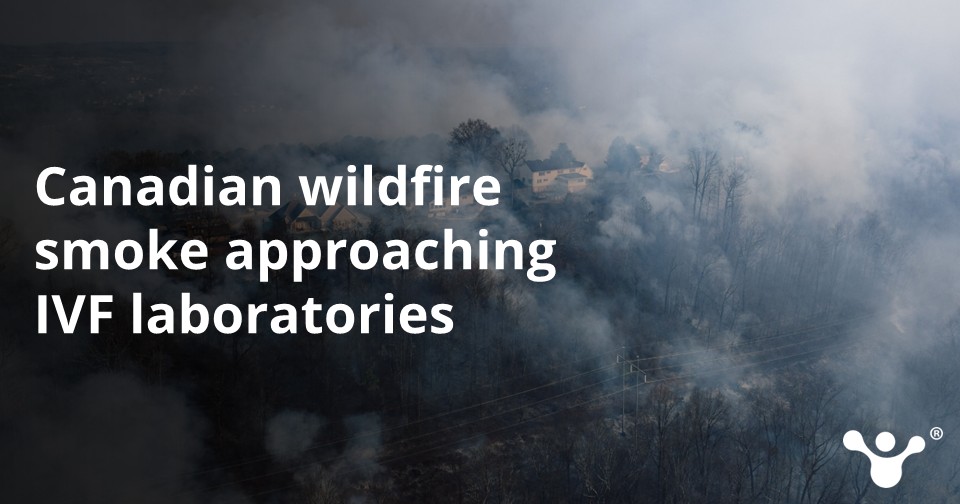
As of this morning, more than 830 wildfires are burning across Canada, with smoke already descending into the Great Lakes region and spreading toward New England. It is not a future concern. It is today’s air quality forecast for IVF laboratories across Canada and the northeastern United States.
Last summer, Toronto experienced some of the worst air quality in recent memory as fires burned across the country. Christine S. Yeh, former Laboratory Director at Twig Fertility, shared what that season looked like from inside a LifeAire-protected lab:
“Throughout the wildfire season, our LifeAire-protected laboratory maintained excellent air quality — with no detectable impact on embryo development or quality despite the severe external conditions. Having a robust air purification system in place provides confidence that, even when outside air quality is compromised, we can continue to deliver the highest standard of care for our patients and give every embryo the best possible opportunity to thrive.”
Wildfire smoke is not a visible threat inside a laboratory. It does not trigger alarms. It does not smell the same as it does outside. But VOCs and ultrafine particles from wildfire smoke infiltrate buildings — and for an embryo in culture, what is in the air matters at concentrations far below what any human in the room would notice.
IVF programs in affected regions should be asking right now: what is protecting the air in our laboratory today?