

Isopropyl Alcohol Infiltration in Modern IVF Labs: A Review of Persistent Airborne Toxins

A peer-reviewed poster abstract presented at the ASRM Annual Scientific Congress, October 2024, examining isopropyl alcohol infiltration as a persistent airborne toxin in modern IVF laboratories. Isopropyl alcohol is widely used as a disinfectant in clinical and laboratory environments and generates airborne VOC contamination that can infiltrate IVF incubator environments and culture media. The study reviews the persistence of IPA in the IVF laboratory air environment and its potential impact on embryo culture conditions and outcomes, contributing to the growing evidence base for maintaining VOC levels well below current clinical thresholds in fertility medicine. Presented at ASRM Annual Scientific Congress, October 2024. Authors: Orsolini, M.; Schenkman, E.; Russack, J.; Huynh, H.; Schust, D.; Raburn, D.; Worrilow, K.C.; Fox, J.T.
Low-Level Volatile Organic Compounds Disrupt Embryo Morphokinetics and Development in Murine Preimplantation Embryos

A peer-reviewed poster abstract published in Fertility and Sterility, October 2024, examining the impact of low-level volatile organic compounds on embryo morphokinetics and development in murine preimplantation embryos. Current IVF guidelines recommend maintaining VOC levels between 400 and 800 ppb, yet this study presents emerging evidence that VOCs below that threshold can adversely affect specific metrics of embryogenesis. Using time-lapse analysis, the study assessed the impact of low-level VOC exposure on developmental timing across multiple embryo stages. The findings strengthen the scientific rationale for maintaining VOC concentrations well below current clinical thresholds in IVF laboratory environments. Published in Fertility and Sterility, October 2024. Authors: Orsolini, M.; Schenkman, E.; Russack, J.S.; Huynh, H.T.; Schust, D.J.; Worrilow, K.C.; Fox, J.T.

The Positive Impact of a Novel Air Purification Technology on Environmental and Clinical Outcomes

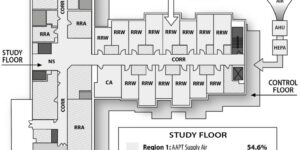
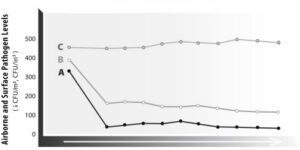
A peer-reviewed conference abstract examining the impact of LifeAire’s advanced air purification technology on environmental and clinical outcomes in a long-term care facility. The study deployed LifeAire’s system in a memory support unit and compared environmental and clinical metrics against a HEPA-only control unit on the same floor. The technology, designed to destroy the DNA and RNA of all bacteria, fungi, and viruses on a single pass while also remediating volatile organic compounds, produced measurable improvements in airborne and surface pathogen burden, facility-acquired infection rates, and staff absenteeism. Published in Innovation in Aging, Volume 5, Supplement 1, December 2021. Presented at the Gerontological Society of America Annual Meeting. Authors: Schlener, S.D.; Urrutia, A.R.; Worrilow, K.C.; Bock, K.

facility acquired infections economic workforce implications long-term care

The Economic and Workforce Implications of Facility Acquired Infections

A conference presentation by Dr. Kathryn C. Worrilow, Founder and Chief Scientific Officer of LifeAire Systems, delivered at the LeadingAge Fall Financial Conference. The presentation examines the economic and workforce implications of facility-acquired infections in long-term care environments, addressing the financial burden of HAIs on facility operations, the impact of staff absenteeism driven by airborne pathogen exposure, and the return on investment case for advanced air purification as a proactive infection control strategy. Drawing on LifeAire’s peer-reviewed clinical evidence from long-term care settings — including a 39.6% reduction in facility-acquired infections and a 47% reduction in staff call-outs — the presentation makes the financial and operational case for comprehensive airborne pathogen remediation in senior living and memory care environments. Presented at the LeadingAge Fall Financial Conference, 2023. Author: Worrilow, K.C.

Reduced FAIs & Staff Call-Outs, A 15-Month Study

A conference presentation delivered at the 2021 NADSA National Conference reporting preliminary findings from a 15-month IRB-approved study of LifeAire’s advanced air purification technology in a long-term care memory support facility. The study compared a LifeAire-protected unit with a HEPA-only control unit on the same floor, measuring airborne and surface pathogen burden, facility-acquired infection rates, and staff absenteeism over the full study period. Results demonstrated significant reductions in facility-acquired infections and staff call-outs in the LifeAire-protected unit. This conference presentation preceded the full peer-reviewed publication of the study’s findings in The Journals of Gerontology: Series A (2023) and in the Journal of Gerontology and Geriatric Medicine (2023). Presented at the 2021 NADSA National Conference, October 2021. Authors: Schlener, S.; Urrutia, A.R.; Worrilow, K.C.

Economic Effects of Air Purification Technology on Healthcare-Acquired Infection Costs: A Study of Simulated Implementation across Low-and-Middle-Income Regions of the Globe

A peer-reviewed study published in the International Journal of Academic Medicine examining the economic effects of advanced air purification technology on healthcare-acquired infection costs through simulated implementation across low- and middle-income regions of the globe. The study models the potential financial impact of deploying LifeAire-class air purification technology in healthcare facilities across diverse economic contexts, demonstrating the broader global applicability of the infection control and cost reduction outcomes documented in U.S.-based clinical studies. Published in International Journal of Academic Medicine, Volume 7, 2021, pages 285-286. Authors: Kelley, K.C.; Schlener, S.D.; Levicoff, L.; Stawicki, S.P.

Novel In-Line Gas Filter Demonstrates Improved Blastocyst Development and Extended Service Life – A Multi-Center Study.

An independent multicenter prospective randomized trial published in Fertility and Sterility comparing blastocyst development outcomes using two commercially available in-line gas filters for IVF incubators across four independent laboratories over a six-month period. The study compared the Aire~LifeLine in-line gas filter against the CODA Xtra filter, with pronuclear embryos cultured to Days 5 and 6 using laboratory-specific protocols. Results demonstrated improved blastocyst development rates with the Aire~LifeLine, as well as extended filter service life. The study provides independent, third-party evidence supporting the clinical effectiveness of the Aire~LifeLine for IVF incubator gas filtration. Published in Fertility and Sterility, 2021. Authors: Alouf, C.A.; Milette, B.; Chang, T.A.; Degelos, S.; Celia, G.

The impact of comprehensive air purification on patient duration of stay, discharge outcomes, and health care economics

The Impact of Comprehensive and Live Air Purification on Health Resource Utilization (HRU)​

A conference abstract presented at the Academic Surgical Congress examining the impact of comprehensive and live air purification on health resource utilization in an acute care hospital setting. The abstract presents findings from the St. Luke’s University Health Network research team — the same team whose full 12-month retrospective cohort study of 8,255 patients was subsequently published in the journal Surgery in September 2020. The data examines the relationship between advanced air purification and measurable improvements in patient length of stay, discharge outcomes, and healthcare economics. Presented at the Academic Surgical Congress, 2020. Authors: Wolfe, S.; Brisendine, C.; Levicoff, L.; Eid, S.; Zangari, M.; Ford, F.; Snyder, B.; Moyer, W.; Stawicki, S.P.

The Effects of Air Purification Technology on Clinical and Economic Outcomes

A conference presentation delivered at the Keystone Chapter of the American College of Surgeons Annual Meeting, 2019, examining the effects of LifeAire’s advanced air purification technology on clinical and economic outcomes in an acute care hospital setting. The presentation represents early findings from the St. Luke’s University Health Network research program that culminated in the full 12-month retrospective cohort study of 8,255 patients published in the journal Surgery in September 2020, documenting a 39.5% reduction in patient length of stay, trending reduction in HAIs, and 23% improvement in per-bed economics. Presented at the Keystone Chapter, American College of Surgeons Annual Meeting, 2019.

Modeling of airborne embryonic volatile compounds (VOCs) in the IVF culture environment – their concomitant cytotoxic concentration within the growth media and embryo.

A peer-reviewed conference abstract published in Fertility and Sterility, Volume 112, Issue 3, presenting early modeling research on the behavior of airborne volatile organic compounds in IVF culture environments. Using equilibrium partitioning models, the study demonstrates how airborne VOCs partition from the air phase through the oil cover layer into water-based culture media and into or onto the embryo itself, reaching cytotoxic concentrations even at low ambient air concentrations. Seven VOCs — including acrolein, formaldehyde, phenol, toluene, acetaldehyde, ethanol, and isopropanol — were identified as of particular concern to embryologists and clinicians. This conference abstract preceded the full peer-reviewed publication in Reproductive BioMedicine Online in 2022. Published in Fertility and Sterility, 2019; 112(3):E122-E123. Authors: Worrilow, K.C.; Urrutia, A.R.; Huynh, H.T.; Fox, J.T.