

Economic Effects of Air Purification Technology on Healthcare-Acquired Infection Costs: A Study of Simulated Implementation across Low-and-Middle-Income Regions of the Globe

A peer-reviewed study published in the International Journal of Academic Medicine examining the economic effects of advanced air purification technology on healthcare-acquired infection costs through simulated implementation across low- and middle-income regions of the globe. The study models the potential financial impact of deploying LifeAire-class air purification technology in healthcare facilities across diverse economic contexts, demonstrating the broader global applicability of the infection control and cost reduction outcomes documented in U.S.-based clinical studies. Published in International Journal of Academic Medicine, Volume 7, 2021, pages 285-286. Authors: Kelley, K.C.; Schlener, S.D.; Levicoff, L.; Stawicki, S.P.
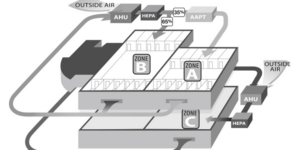
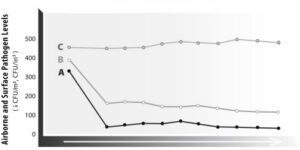
Installation of an Advanced Air Purification System in a Hospital Setting Led to Improved Environmental and Clinical Outcomes

A peer-reviewed study published in RenaRum examining the environmental and clinical effects of installing LifeAire’s advanced air purification system in a hospital setting. The study measured changes in airborne and surface pathogen burden, volatile organic compound levels, and clinical outcome metrics following LifeAire installation, contributing to the growing body of peer-reviewed operational evidence supporting advanced air purification as a clinical intervention in acute care hospital environments. Published in RenaRum, 2021. Authors: Johansson, L.; Urrutia, A.R.; Huynh, H.; Worrilow, K.C.

Novel In-Line Gas Filter Demonstrates Improved Blastocyst Development and Extended Service Life – A Multi-Center Study.

An independent multicenter prospective randomized trial published in Fertility and Sterility comparing blastocyst development outcomes using two commercially available in-line gas filters for IVF incubators across four independent laboratories over a six-month period. The study compared the Aire~LifeLine in-line gas filter against the CODA Xtra filter, with pronuclear embryos cultured to Days 5 and 6 using laboratory-specific protocols. Results demonstrated improved blastocyst development rates with the Aire~LifeLine, as well as extended filter service life. The study provides independent, third-party evidence supporting the clinical effectiveness of the Aire~LifeLine for IVF incubator gas filtration. Published in Fertility and Sterility, 2021. Authors: Alouf, C.A.; Milette, B.; Chang, T.A.; Degelos, S.; Celia, G.

comprehensive air purification patient length of stay hospital economics

The impact of comprehensive air purification on patient duration of stay, discharge outcomes, and health care economics: A retrospective cohort study

A peer-reviewed, IRB-approved retrospective cohort study examining the impact of comprehensive air purification on patient length of stay, discharge outcomes, and healthcare economics at St. Luke’s University Health Network. The study compared 8,255 patients across a LifeAire-protected medical-surgical unit and a HEPA-only control unit over 12 months. Documented outcomes in the LifeAire-protected unit included a 39.5% reduction in patient length of stay, improved discharge metrics, and 23% cost savings per patient bed. The study confirms a direct relationship between advanced air purification and measurable improvements in both clinical and economic hospital performance. Published in Surgery, September 2020. Authors: Stawicki, S.P.; Wolfe, S.; Brisendine, C.; Eid, S.; Zangari, M.; Ford, F.; Snyder, B.; Moyer, W.; Levicoff, L.; Burfeind, W.R.

The impact of comprehensive air purification on patient duration of stay, discharge outcomes, and health care economics

The Impact of Comprehensive and Live Air Purification on Health Resource Utilization (HRU)​

A conference abstract presented at the Academic Surgical Congress examining the impact of comprehensive and live air purification on health resource utilization in an acute care hospital setting. The abstract presents findings from the St. Luke’s University Health Network research team — the same team whose full 12-month retrospective cohort study of 8,255 patients was subsequently published in the journal Surgery in September 2020. The data examines the relationship between advanced air purification and measurable improvements in patient length of stay, discharge outcomes, and healthcare economics. Presented at the Academic Surgical Congress, 2020. Authors: Wolfe, S.; Brisendine, C.; Levicoff, L.; Eid, S.; Zangari, M.; Ford, F.; Snyder, B.; Moyer, W.; Stawicki, S.P.

The Effects of Air Purification Technology on Clinical and Economic Outcomes

A conference presentation delivered at the Keystone Chapter of the American College of Surgeons Annual Meeting, 2019, examining the effects of LifeAire’s advanced air purification technology on clinical and economic outcomes in an acute care hospital setting. The presentation represents early findings from the St. Luke’s University Health Network research program that culminated in the full 12-month retrospective cohort study of 8,255 patients published in the journal Surgery in September 2020, documenting a 39.5% reduction in patient length of stay, trending reduction in HAIs, and 23% improvement in per-bed economics. Presented at the Keystone Chapter, American College of Surgeons Annual Meeting, 2019.

Modeling of airborne embryonic volatile compounds (VOCs) in the IVF culture environment – their concomitant cytotoxic concentration within the growth media and embryo.

A peer-reviewed conference abstract published in Fertility and Sterility, Volume 112, Issue 3, presenting early modeling research on the behavior of airborne volatile organic compounds in IVF culture environments. Using equilibrium partitioning models, the study demonstrates how airborne VOCs partition from the air phase through the oil cover layer into water-based culture media and into or onto the embryo itself, reaching cytotoxic concentrations even at low ambient air concentrations. Seven VOCs — including acrolein, formaldehyde, phenol, toluene, acetaldehyde, ethanol, and isopropanol — were identified as of particular concern to embryologists and clinicians. This conference abstract preceded the full peer-reviewed publication in Reproductive BioMedicine Online in 2022. Published in Fertility and Sterility, 2019; 112(3):E122-E123. Authors: Worrilow, K.C.; Urrutia, A.R.; Huynh, H.T.; Fox, J.T.

Comprehensive and live air purification as a key environmental, clinical, and patient safety factor: A prospective evaluation

Comprehensive and live air purification as a key environmental, clinical, and patient safety factor: A prospective evaluation

A peer-reviewed book chapter published in Vignettes in Patient Safety, Volume 4, edited by Stanislaw P. Stawicki and Michael S. Firstenberg (IntechOpen, March 2019). The chapter presents the first comprehensive prospective evaluation of infectious and aerosolized pathogens — including their speciation, location, and concentration — within a typical hospital setting, and examines the relationship between airborne pathogens and air filtration methodologies in the context of the molecular and microbial epidemiology of illness and infection in clinical environments. The study represents foundational environmental evidence from St. Luke’s University Health Network that preceded the full retrospective cohort study published in Surgery in 2020. Published in IntechOpen, March 2019. DOI: 10.5772/intechopen.84530. Authors: Stawicki, S.P.; Brisendine, C.; Levicoff, L.; Ford, F.; Snyder, B.; Eid, S.; Worrilow, K.C.

Multi-center study: Innovative Control of ambient air quality in multiple IVF laboratories is associated with statistically significant improvements in clinical outcomes – analysis of 5319 cycles.

An independent multi-center peer-reviewed study published in Fertility and Sterility, Volume 106, Issue 3 Supplement, 2016, examining the impact of innovative ambient air quality control on clinical outcomes across multiple IVF laboratories. The study analyzed 5,319 IVF cycles across multiple independent fertility programs and documented a statistically significant 14.9 percentage point increase in ongoing pregnancy rates across all age groups in laboratories using LifeAire’s air quality control technology compared to controls. This independent, externally authored study — conducted entirely by IVF clinicians and scientists with no affiliation to LifeAire — represents the foundational clinical evidence supporting LifeAire’s effectiveness in IVF settings and is the most-cited IVF outcome study in LifeAire’s published research library. Published in Fertility and Sterility, 2016; 106(3 Suppl):e27-e28. Authors: Palter, S.; DiPaola, K.; Sparks, A.E.; Degelos, S.; Koulianos, G.T.; Young, J.; Halicigil, C.; Yalcinkaya, T.; She, E.; Bartolucci, A.

Statistically significant improvements in clinical outcomes using engineered molecular media and genomically modeled ultraviolet light for comprehensive control of Ambient Air (AA) quality.

A peer-reviewed conference abstract published in Fertility and Sterility, Volume 102, 2014, examining the impact of LifeAire’s Aire~IVF air purification system on clinical outcomes in 1,245 non-donor IVF patients across three fertility programs over 24 months. The study evaluated the effect of comprehensive ambient air quality control — using engineered molecular media and genomically modeled ultraviolet light — on key IVF outcome metrics. Results demonstrated statistically significant improvements in implantation rate, clinical pregnancy rate, ongoing pregnancy rate, and blastocyst conversion rate following system installation, with blastocyst conversion rate increasing from 57.1% to 67.6%. The findings confirm that controlling airborne pathogens and improving ambient air quality are critical factors in optimizing embryogenesis outcomes. Published in Fertility and Sterility, 2014; 102:e91. DOI: 10.1016/j.fertnstert.2014.07.307. Authors: Forman, M.; Sparks, A.E.T.; Degelos, S.; Koulianos, G.; Worrilow, K.C.